Not all smoke detectors are the same. They come in several different styles, shapes, and some also function as carbon monoxide detectors. Some are battery powered, some are powered through the home’s electrical system, these are sometimes referred to as “hard wired”, and in recent years newer models contain an internal battery that can last up to nearly a decade without needing replacement. Some operate using Ionization smoke detection, while others are photoelectric.
A Look Into the History of Smoke & Fire Detection Devices
Smoke detectors first became required in residential buildings in 1973 in certain parts of the country. In 1976 the NFPA (National Fire Protection Association) passed the Life Safety Code (NFPA 101). This safety code stated that smoke alarms are required to be in every home. By 1980 it was estimated that nearly 50% of homes in the US had working smoke detectors. Below are some additional key dates when specific requirements and/or recommendations were introduced.
1989
- NFPA 74 required interconnected smoke alarms for new construction. If one alarms, that all alarm.
1993
- NFPA 72 required smoke detectors be placed in all sleeping areas in newly constructed homes.
1996
- NFPA 72 required hardwired smoke detection devices be installed in newly constructed homes.
- NFPA 72 required smoke and fire alarms to be 3 beeps, pause, and repeat. This pattern is also known as the Temporal 3 Sound or Audible Emergency Evacuation Signal, ANSI S3.41
1999
- UL 217 required smoke/fire detector manufacturers to clearly print the date of manufacture of each unit.
On July 1, 2009, Colorado House Bill 1091 went into effect in Colorado. This law stated that all residential properties must be equipped with Carbon Monoxide detectors. If you hear anyone tell you that their home does not have to have them because it was “grandfathered in”, well, they may not know Colorado history….
Why do smoke detectors turn yellow?
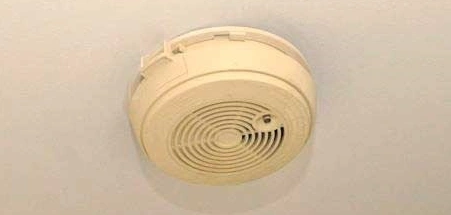
Modern day smoke and carbon monoxide detectors made for residential use are constructed with a special type of polymer plastic, typically ABS. This material is usually white and will begin to change color or “yellow” as it ages. The reasoning for this is due to the degradation of the polymer caused by the destabilization or leaching of Brominated flame retardants (like TBBPA or PBDEs, historically) within the polymer and other environmental factors such as heat, air pollution, and UV light. If a smoke detector has been placed in a room with quite a bit of natural sunlight, it will tend to yellow faster than a detector mounted in a room with little to no natural light as UV rays from the sun are highly reflective and can bounce around a room for quite some time before being absorbed by a non-reflective material.
The lifespan of a smoke detector is 7 to 10 years, and as it turns out, that is about how long it can take for the outer casing of a detector to turn yellow, even in a room with little to no daylight exposer. If you see a smoke detector in a residential building that appears to be yellowish in color, it’s most likely old and in need of replacement.
Testing and Maintaining Smoke & Carbon Monoxide Detectors
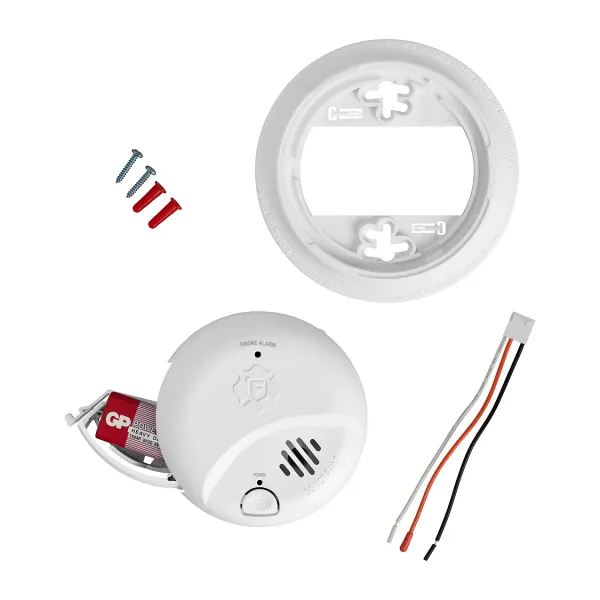
Hard wired smoke detectors all have a compartment inside for a backup battery. Since hardwired detectors operate using power supplied by the home’s electrical system, it will not operate as intended if there is a power outage, which is why they all now have a backup battery. If you hear a detector randomly chirping, it’s one of two things, there is a fault with the detector, or the backup battery is dead or dying. An individual should never just simply unplug one of these units if it is faulty and the battery is good, or if the unit is good and the battery is dead. There just might be a day, or night, when you need that loud obnoxious chirping thing on the ceiling to be working.
It is required that all smoke detectors have a stamp on them that indicates the date of manufacture and has a line where an installation date can be written, by hand, on the side or back of the unit. If you replace a smoke detector, be sure to find and fill out this sticker and put a new backup battery in the unit. Newer and slightly more expensive models come with a built-in backup battery, such as the First Alert SMI105-AC Interconnect Hardwire Smoke Alarm with 10-Year Battery Backup does not need frequent battery changes. As a matter of fact, the battery should last the entire life of the unit.
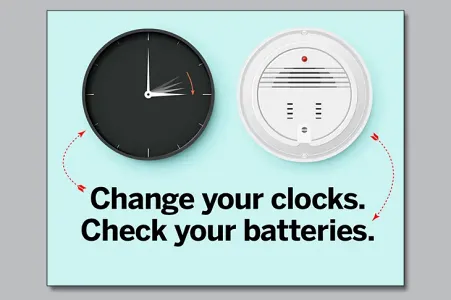
As part of a regular home maintenance schedule, all smoke and carbon monoxide detectors should be on the list. Test them at least biannually (twice a year) or more often in areas prone to power outages. All detectors now a days have a test function and/or button on them. I know this might sound crazy, but twice a year, get a ladder, put on a pair of earmuffs, and push that little button. If it starts screaming at you, it’s working. If it doesn’t, you could have a faulty detector. As a matter of fact, the NFPA recommends checking the batteries in your detectors when the clocks change to and from daylight savings time.
If you don’t have good hearing protection, and fear ladders, you can always call Pandion Property Inspections LLC to conduct an Annual Home Maintenance Inspection, and I will risk the hearing loss for you.