Every Homeowner Should Have Some Basic Tools,
For Those Inevitable Home Maintenance Projects
When it comes to home ownership, there is one thing that many homeowners realize shortly after buying their first home. That realization is there are many home maintenance projects and/or tasks that will have to be tackled. Simple things like hanging pictures, installing mini blinds, replacing worn items such as doorknobs or maybe a bathroom faucet, painting, or unclogging a toilet doesn’t necessarily require a contractor or specialist. These tasks do require, at the very least, some basic tools.
In this post, I have put together a list of tools, in no particular order of importance, that should be at every homeowner’s disposal and will even share some photos of tools out of my own collection. You will be able to clearly see that they have been around for quite some time, have been well used, yet still loved. All joking aside, not all tools in a tool kit need to be top of the line, name brand, or crazy expensive, especially if they are intended only for the occasional basic DIY task. If you are planning on handling larger more exhaustive projects, then you might have to purchase some tools that can hold up to the abuse better or be considered contractor or industrial grade, but we will save that for another discussion. None of the tools listed in this post will need to come from specialty suppliers and can be found readily available at your local hardware store or online retailer. In addition to photos of my own tools, taken on my workbench by yours truly, I will be sharing stock photos found online. These stock photos are not an endorsement, of any kind, of any brand that may be shown.
Shopping For Tools
So Many Choices, Oh My…
When shopping for tools, keep in mind that all the items mentioned in this post come in many different shapes, styles, sizes, brands, and yes, even colors. When starting out shopping for tools, it can be incredibly easy to become overwhelmed at all the choices available. I will discuss several of these differences below and hopefully it will curb that “exploding brain” feeling that you may experience.
With all that being said,
LET’S GET STARTED!
10 Must Have Tools
#1. Screwdrivers
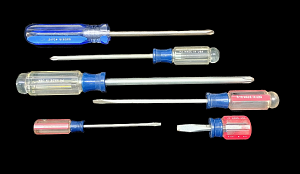
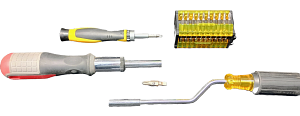
Screwdrivers come in a ton of different lengths and sizes. With a surprisingly growing number of fastener designs and applications, this tool must follow suit with regard to tip design. This is why I decided it is best for sanity’s sake just to lump these into a single item on this list. For the average DIYer and homeowner, there are only two types that absolutely must be in every toolbox. Those two types are a straight, or flat bladed, and Phillips are the most commonly used in everyday applications. It is always a good idea to consider buying sets of each of these or look for a kit that contains a handle with interchangeable tips. Flat bladed screwdriver sizes are based on the width and thickness of the blade itself whereas Phillips bits have designated sizes ranging from itsy bitsy PH0000 to the husky PH5. For most household applications, PH1 through PH3 is all that will be needed, with the exception of those little security screws that can be found battery covers on remotes, electric lanterns, and kids toys. Those usually take a PH00/PH0 to remove.
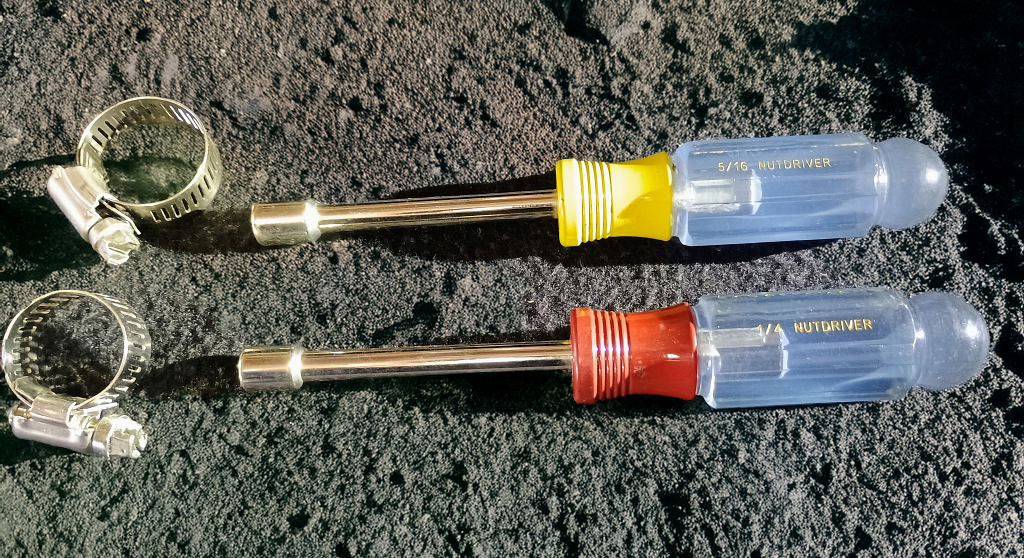
Although not necessarily a must have, nut drivers can come in quite handy, especially for installing or removing hose clamps on irrigation/sprinkler lines out in the yard. Since they are shaped like and used in the same fashion as a screwdriver, I’ve included them here. The most common sizes for hose clamp screws used in irrigation systems are ¼” and 5/16”.
#2 Hammer
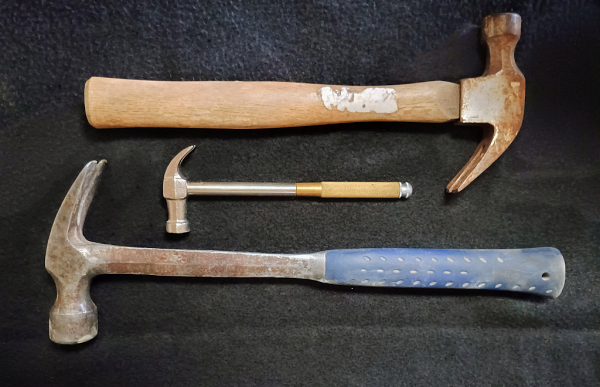
Having about 20 hammers in my own collection, the one I find to be the most used in simple and basic chores is a 16 oz claw hammer. When looking at different claw hammers you may notice that the head and claw portions can vary somewhat. The striking surface, or head, may be smooth or knurled, otherwise known as a waffle head. Waffle head hammers are mainly used for rough framing and sinking larger nails into lumber. Unless you are using the hammer for framing projects, the striking surface should be flat and smooth. The claw portions have different designs based on the tool’s intended use. Trim hammers have a tightly curved claw, intended for pulling smaller nails used in trim carpentry. Framing hammers typically will have a slightly curved or nearly flat claw. Finding one that is somewhere in between these two designs works well for all-around general-purpose use. The handle material is not as relevant as the shape. Be sure it feels balanced and comfortable to grip. Remember this is a striking tool. If you can’t hold on to it, well, bad things can happen. Small novelty hammers, like the one pictured, can come in handy in some applications, but aren’t really built to hold up to a lot of abuse.
#3 Tape Measure
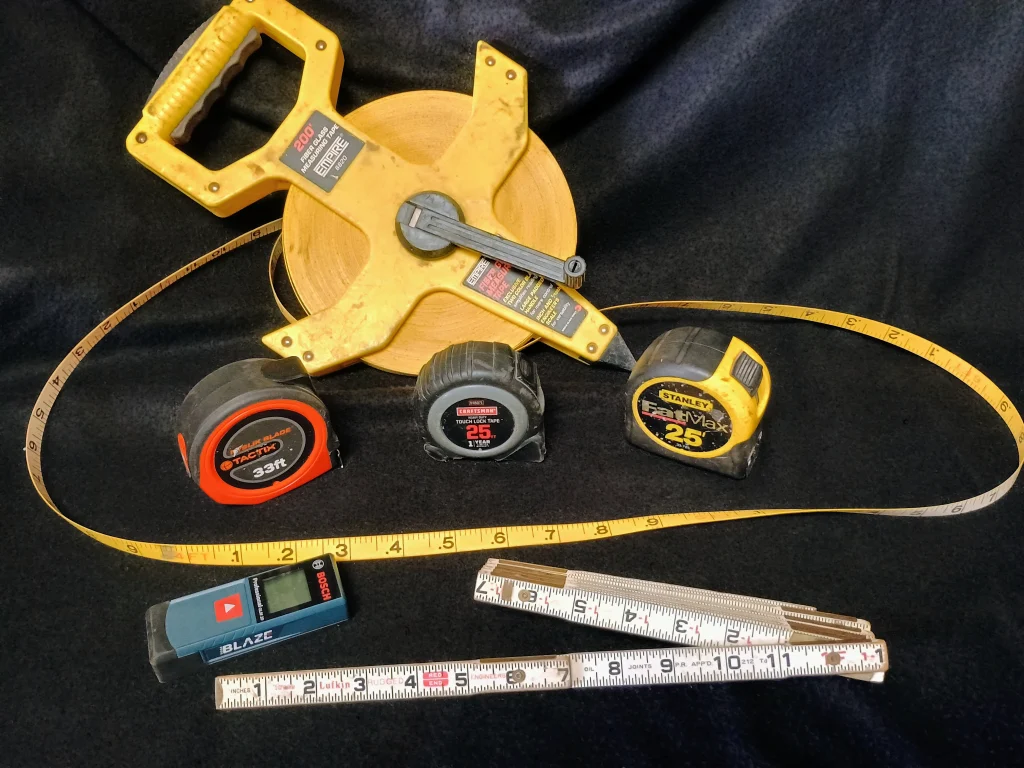
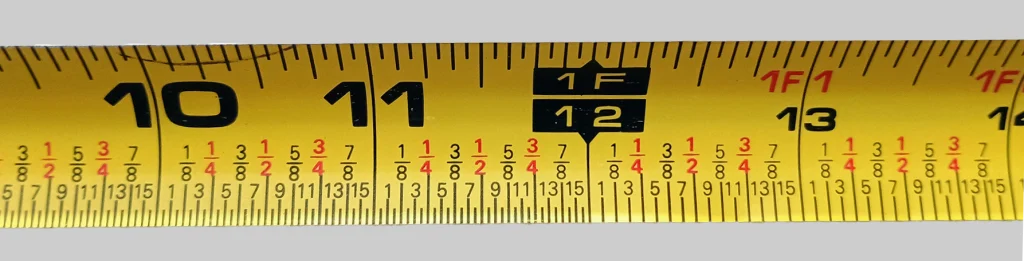
As you can see in the image above, there are quite a few measuring tools available on the market today. From cloth tapes used to measure long distances to laser range finding gizmos and foldable rulers. Some measure in tenths of a foot or inches, and some do both. Others may use the metric system and measure in centimeters and millimeters. These all are designed with a specific purpose in mind. In most cases, an inexpensive 25 ft. standard tape measure will do the job. If you are not all too savvy on how to read the markings on a tape measure, some manufacturers add “quick find” fractions above the hash marks.
#4 Adjustable Wrench
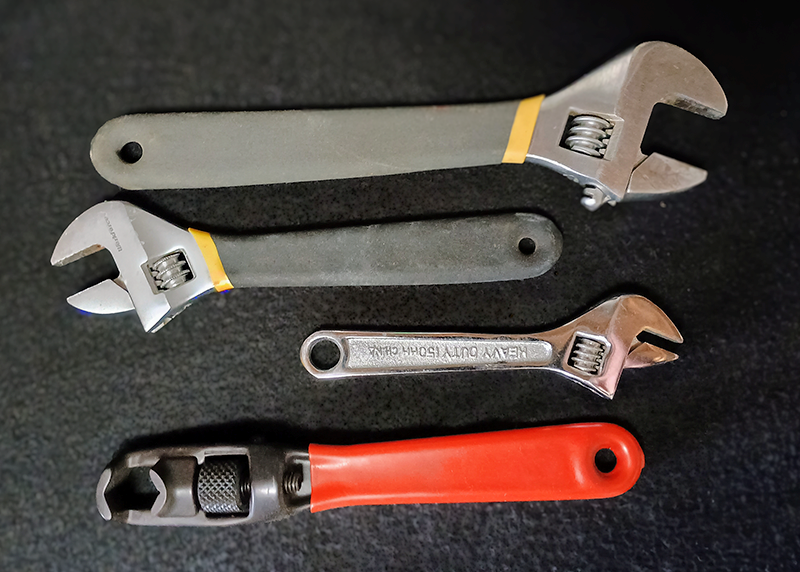
Adjustable wrenches can be one of the most used tools in a homeowner’s toolbox. No home should be without at least one of these handy tools. With simple thumb screw and a sliding jaw, they are incredibly easy to use. These wrenches can be purchased individually or in small sets. I recommend a starter set that contains at least three sizes. Foam padded handles can be nice but can be damaged easily. Solid rubber coated handles are best if ordinary unpadded handles do not suit your liking.
#5 Pliers
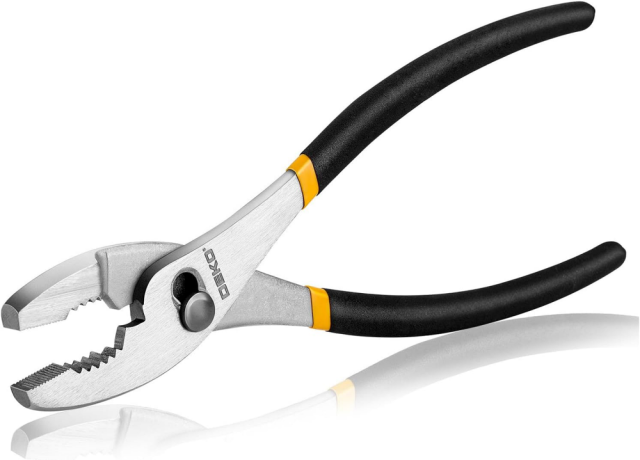
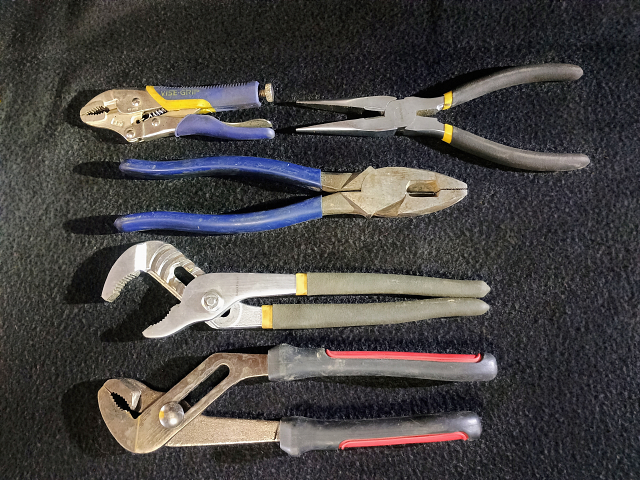
Like the screwdriver, there are a mind-boggling number of variations and uses. Out of all these variations, there are three types of pliers every homeowner should have at least one of. Those three are the common Slip Joint pliers, Tongue & Groove pliers, and Locking Jaw pliers.
As the name implies, Slip Joint pliers have an adjustable pivot that can easily allow the tool to grab small and large items alike. Most have a flat portion at the tip and a rounded area in the middle of the jaw that can be used to hold round objects like pipes or rods. Near the back of the jaw many will incorporate a wire cutter.
Tongue & Groove Pliers, also known as water pump or arc-joint pliers, are another form of adjustable plier with a set of grooves milled into the handles, although some may have a similar configuration as slip joint pliers with more adjustment options. These pliers have a larger range when it comes to opening size and the jaw area is often bent or off set allowing it to fit into awkward spaces. The handles typically appear too long compared to the jaw, but that design allows for more leverage and a better grip, not only for the object it is holding, but for the user.
The third type of plier no home should be without is the locking jaw plier. This tool contains a locking mechanism that when engaged will lock the jaws into position. Think of it as a handheld vise or clamp. Tongue & groove and locking pliers come with jaws that are either straight or curved. The curved options are typically more useful when dealing with pipe, pipe fittings, or other plumbing related items. Flat jaws are helpful with larger flat surfaced items like retaining nuts that are used to secure a drainpipe to the bottom of a sink for example.
Additional types of pliers that are nice to have around are needle nose pliers and lineman pliers. Needle nose pliers have a long skinny jaw that are helpful for grabbing small items that are in tight places. Lineman pliers have a blunt flat tip with knurling inside the jaw designed for gripping and many incorporate wire cutters on the side of the jaw. Although lineman pliers are intended or designed for electrical wiring projects, I have found they can be a handy gripping tool for small items in awkward spaces. Both can be used to hold those little nails used to hang pictures while you begin to hammer them into walls as well. Speaking from experience, I can say with quite a bit of humility, it always works out better if you smack the pliers with the hammer instead of your thumb or fingers.
#6 Utility Knife
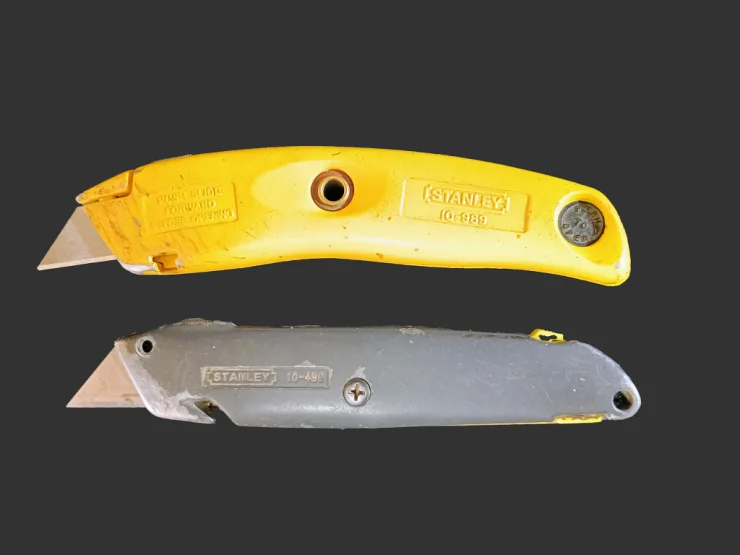
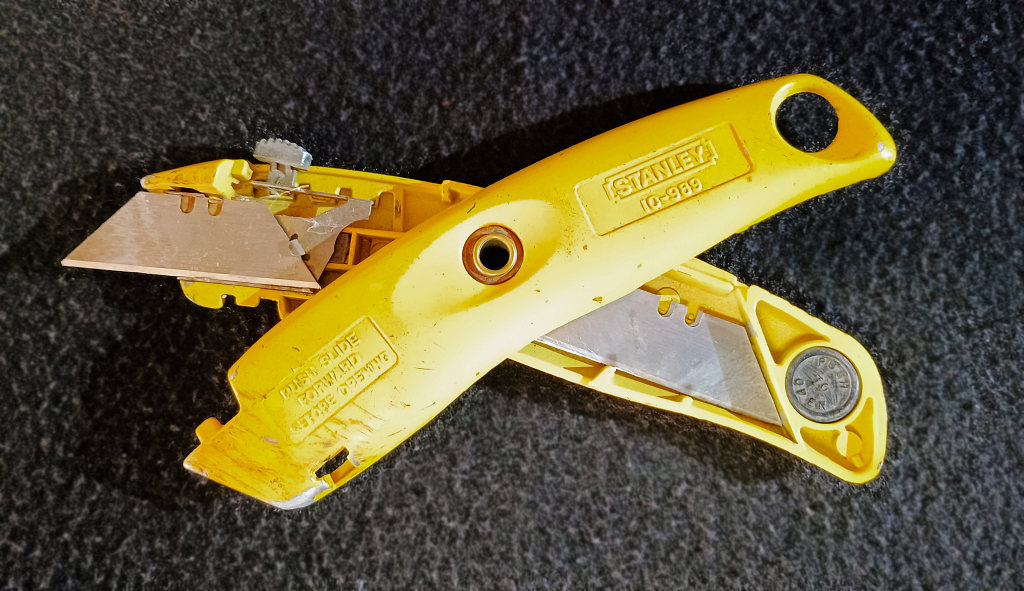
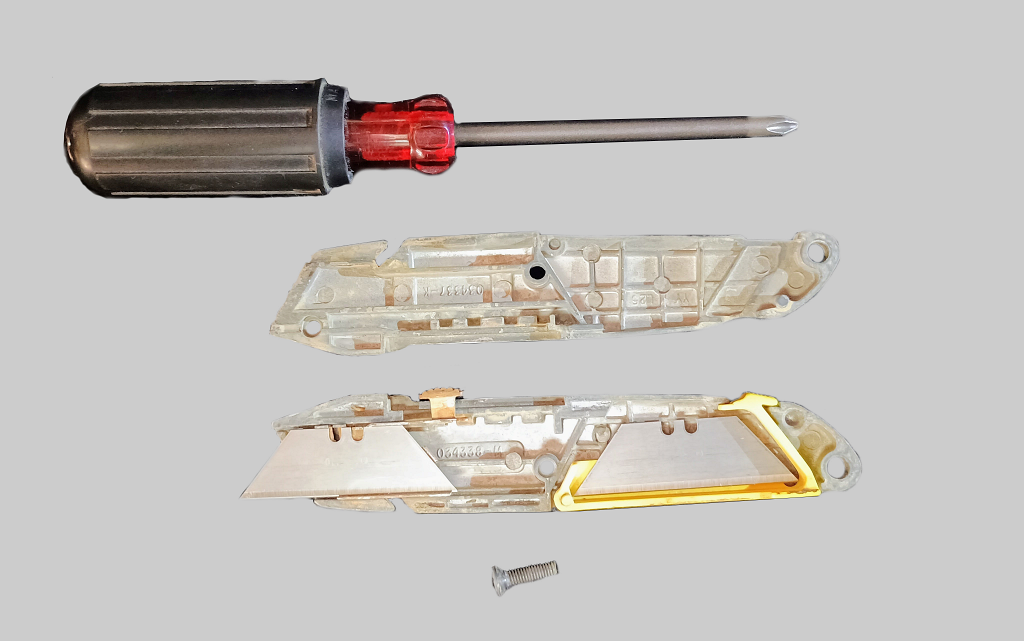
Utility knives, commonly called box cutters, are great to have around for, as you could imagine, cutting down boxes. Especially the ones that online retailers use to deliver packages. The reinforced tape they use on those require a good sharp cutting edge to cut. These knives can also be used for cutting drywall, carpet, laminate flooring, plastic, weed barrier used in landscaping, and sharpening carpenter pencils. Most have an internal storage area for extra blades. Some variations will require a screwdriver to open so you can replace the blade, while others will have a built-in pivot and locking system, where no tools are required to change the blade. Other features include fixed blades, adjustable blade positioning, and spring-loaded retractable blades. My personal favorite style has adjustable positioning and built-in pivot and locking system that makes blade changes quick and efficient. As a word of caution, these knives use razor blades that are extremely sharp, so be sure to be careful when using them. Improper or careless use of this tool can lead to a trip to the emergency room, and nobody wants that.
#7 Flashlight
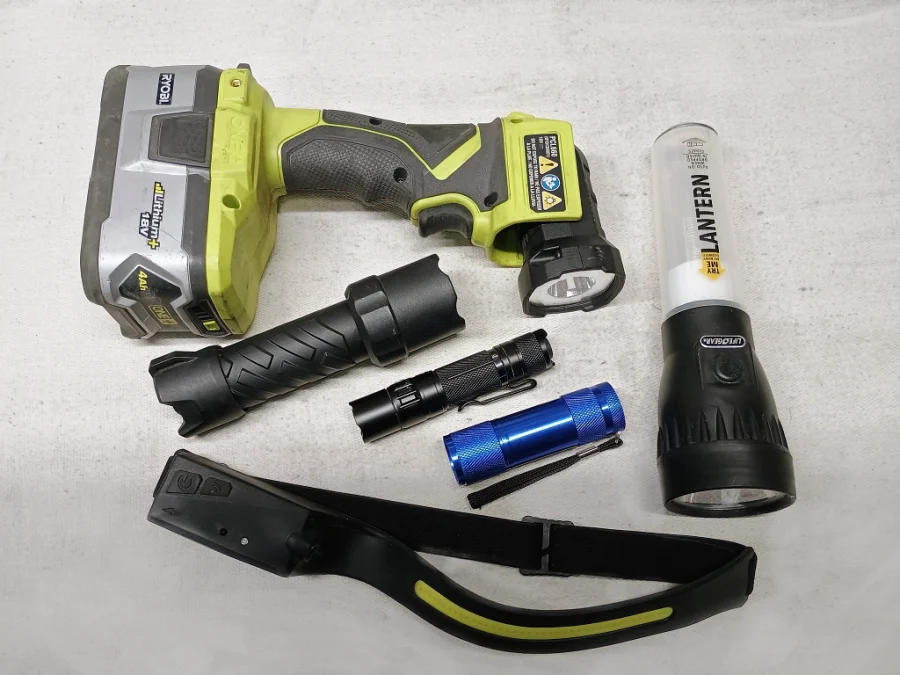
When conducting a home inspection, I always find areas of a home with little to no lighting. This is why I carry several styles of flashlights including a couple of head lamps for those times when I need to be “hands free”. Flashlights are a must have in every home. As a homeowner, you never know when the power will go out or you may find yourself working in a poorly lit area. Don’t be left in the dark. Portable, light weight, and simple to use, a flashlight is a great way to “shed some light” into or onto any situation when needed.
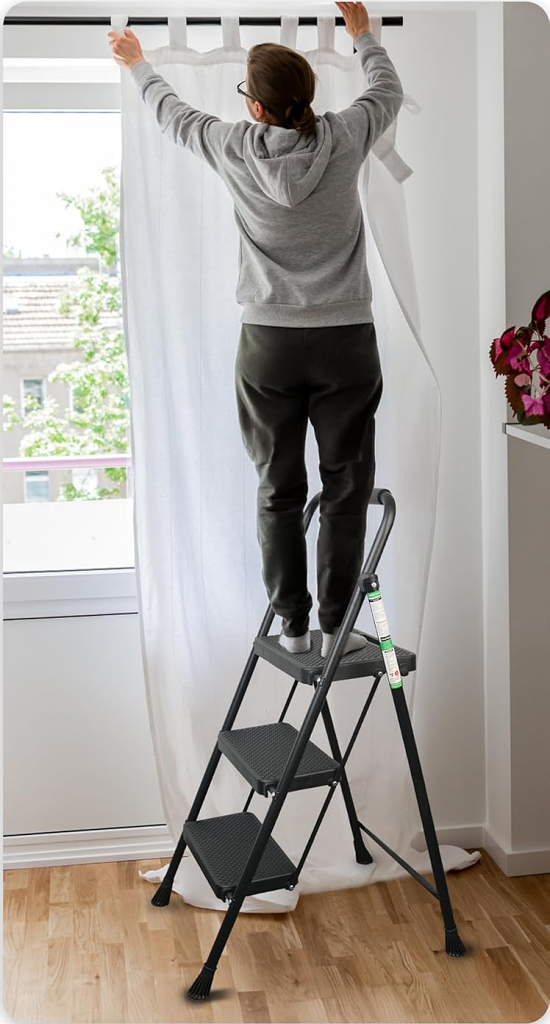
#8 Step Ladder
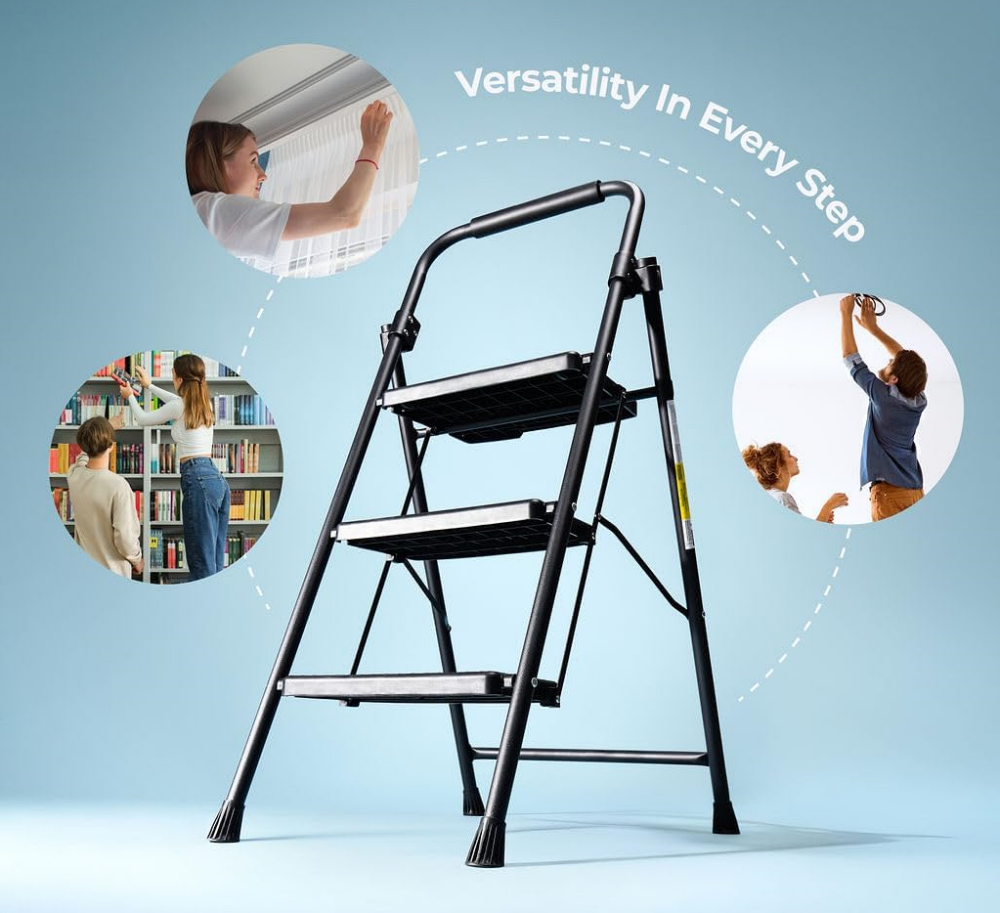
At some point you will find yourself having to replace a burned-out light bulb or change out a dead smoke detector battery. More often than not, these tasks cannot be accomplished without the aid of a ladder. In recent years, ladder manufacturers have been keeping the average homeowner in mind when designing new models. Find a ladder that is light enough for you to handle easily and tall enough to get you as high as you need to go.
#9 Snow Shovel
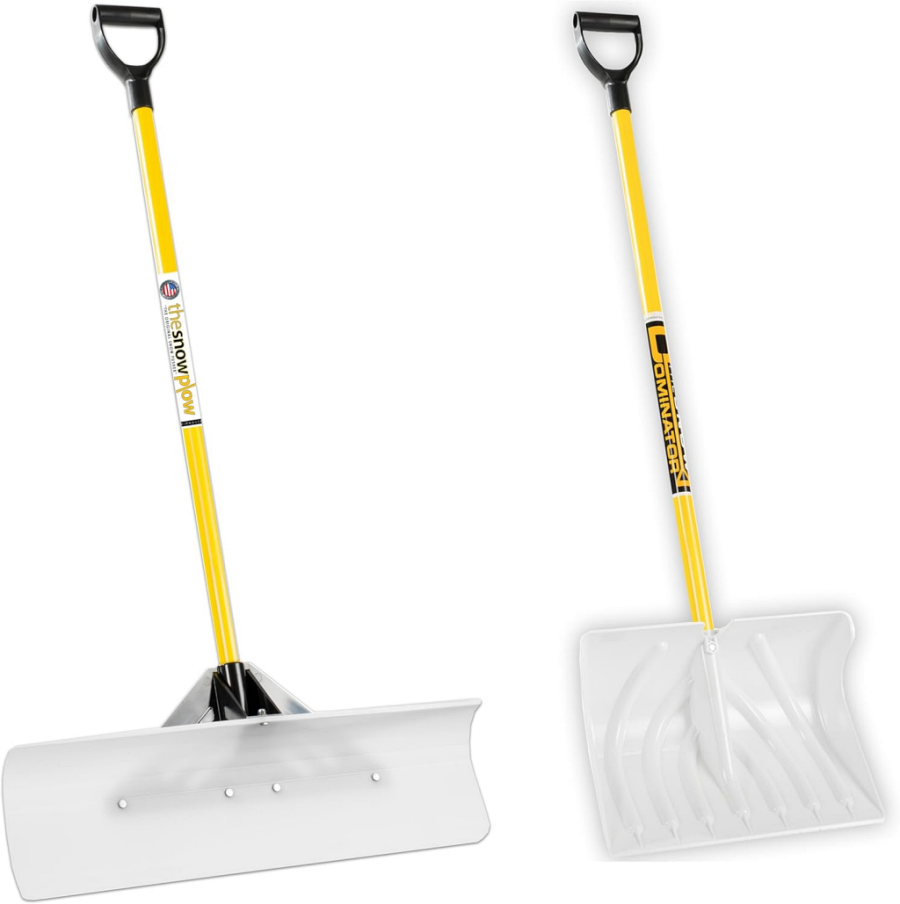
In Colorado, during the winter months there is a very good chance that it just might snow. It’s never a good idea to just let snow sit and stay on sidewalks and driveways, not only for safety reasons, but it can damage the surface over time. Besides that, many municipalities require homeowners to remove snow from public sidewalks in front of or around their home within 24 hours of a winter storm. The municipality may technically own the sidewalk, but municipal ordinances pass the maintenance responsibilities on to the homeowner. When looking for a snow shovel, look for one that isn’t too heavy or has too short of a handle. Design and function can play a part in deciding what to buy. I personally use two styles on my property that work well. One style is for pushing or plowing. The other is for scooping and throwing. Find what works best for you and your situation.
#10 Plunger
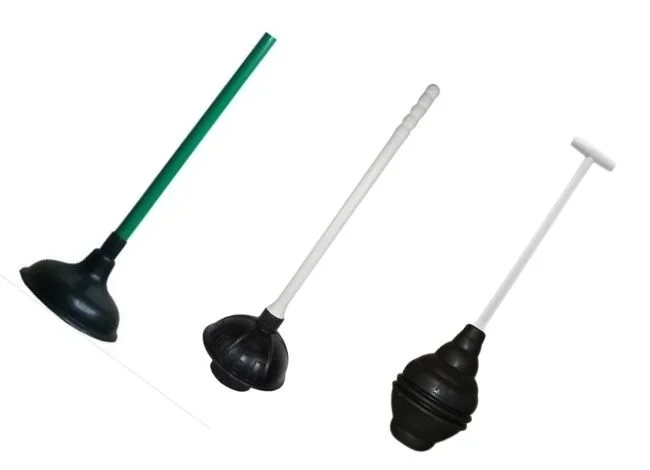
Rounding off the top ten is the one tool that most people don’t want to talk about. It’s almost like the black sheep of the family or that one relative that you’d rather not admit to having. That tool is the plunger. At some point in one’s life of being a homeowner, they will have to deal with a stopped-up toilet, especially if you have little ones running around. With toilets using less water per flush nowadays, it can be easy to have a little too much toilet paper in the bowl when the handle is pushed to plug things up. A plunger is a simple and effective tool for clogs such as this.
The next five items on this list are not considered to be “must haves” by many that have written similar articles, but in my opinion, SHOULD BE included. In some households they might not get much use, while in others they most definitely will.
#11 Level
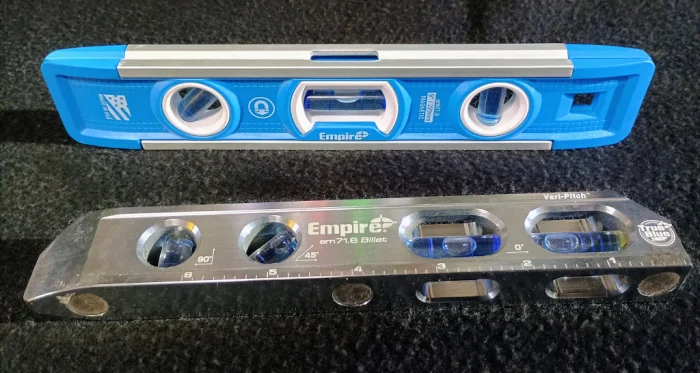
Levels come in many lengths ranging from a few inches to over 8 feet. There are also instruments that project laser beams that can be used in many applications. For the average DIYer, what is quite often referred to as a torpedo level is a must have. These 6” to 9” levels work great for hanging pictures and checking short surfaces, typically under three feet. Keep in mind that specific size levels are only rated and accurate for specific distances. Each manufacturer has different specifications in this regard. If you are trying to level a large cabinet, countertop, or door, use the longest level you can for the best accuracy.
#12 Painter’s Multi-tool
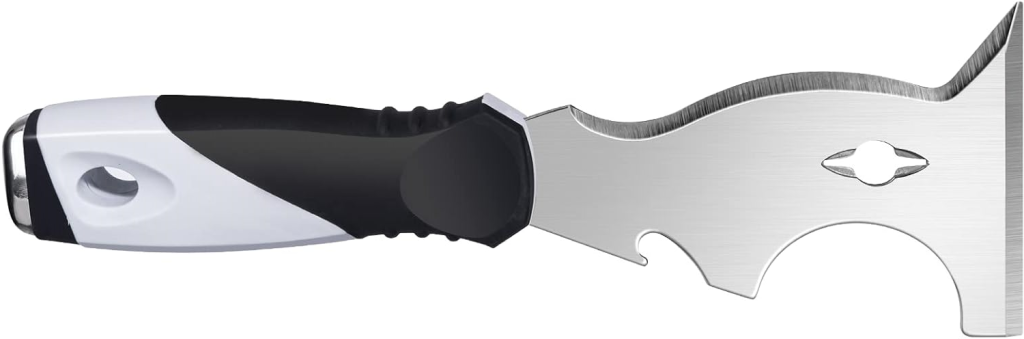
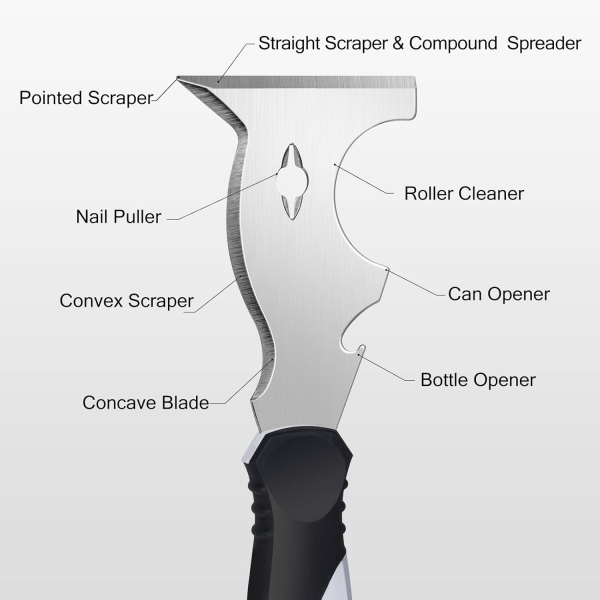
A painter’s multi tool is not only for professional painters. They are a handy tool for the DIYer as well. They include a scraping edge that can be used to dislodge chipping paint or act as a straight edge for cutting masking tape. This edge can also be used to spread wood filler or putty. A rounded area on the side of the blade is incorporated to aid in the cleaning of paint rollers, and a sharp point can be used to help clean paint brushes or remove old caulk in tight corners that needs replaced. Most have a small flat bladed corner that can be used to open paint can lids and many have a metal cap on the handle to tap the lid back in place, so it stays secure.
#13 Cordless Drill
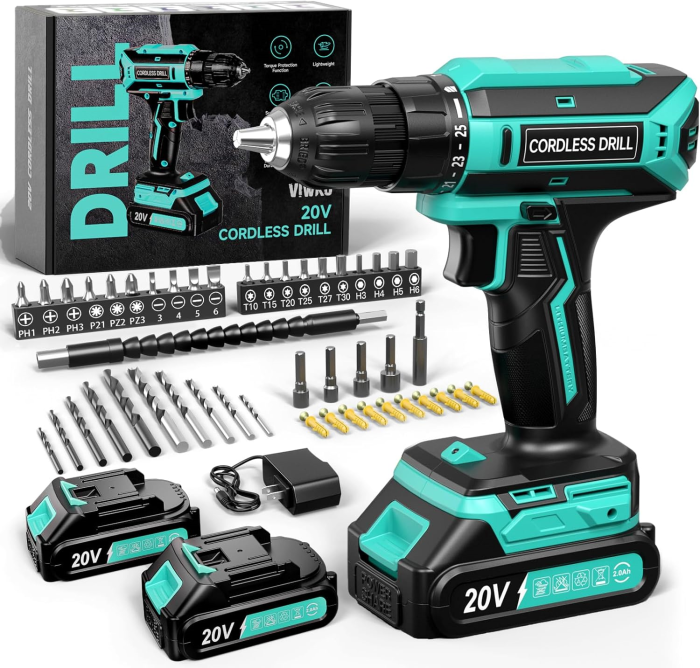
Battery powered tools are all the rage in modern times, and they can save a ton of time and energy. This is especially true when it comes to cordless drills. No more having to drag out extension cords. Thanks to modern technology, they are lighter and more powerful than ever. Most come with Lithium-Ion batteries and are far superior to the old NiCad, or nickel-cadmium, batteries of yesteryear. There is a bit of a caveat when shopping for a cordless drill, however. Not all drills are created equal. The more popular brand names, that can be found in the big box stores, produce higher quality drills that can stand the rigors of everyday use, whereas the lesser-known products you can find online may not be quite as good with regards to quality and longevity. If you are on a tight budget and are looking for an inexpensive tool that won’t see much use, you can find good deals online for non-name brand drills for most of the year. Otherwise, pay attention to local sales ads around various holidays including Father’s Day. Many manufacturers that produce higher quality drills will have great sales on these tools and various battery powered tool kits, that will contain more than just a drill, around these holidays.
#14 Socket Set
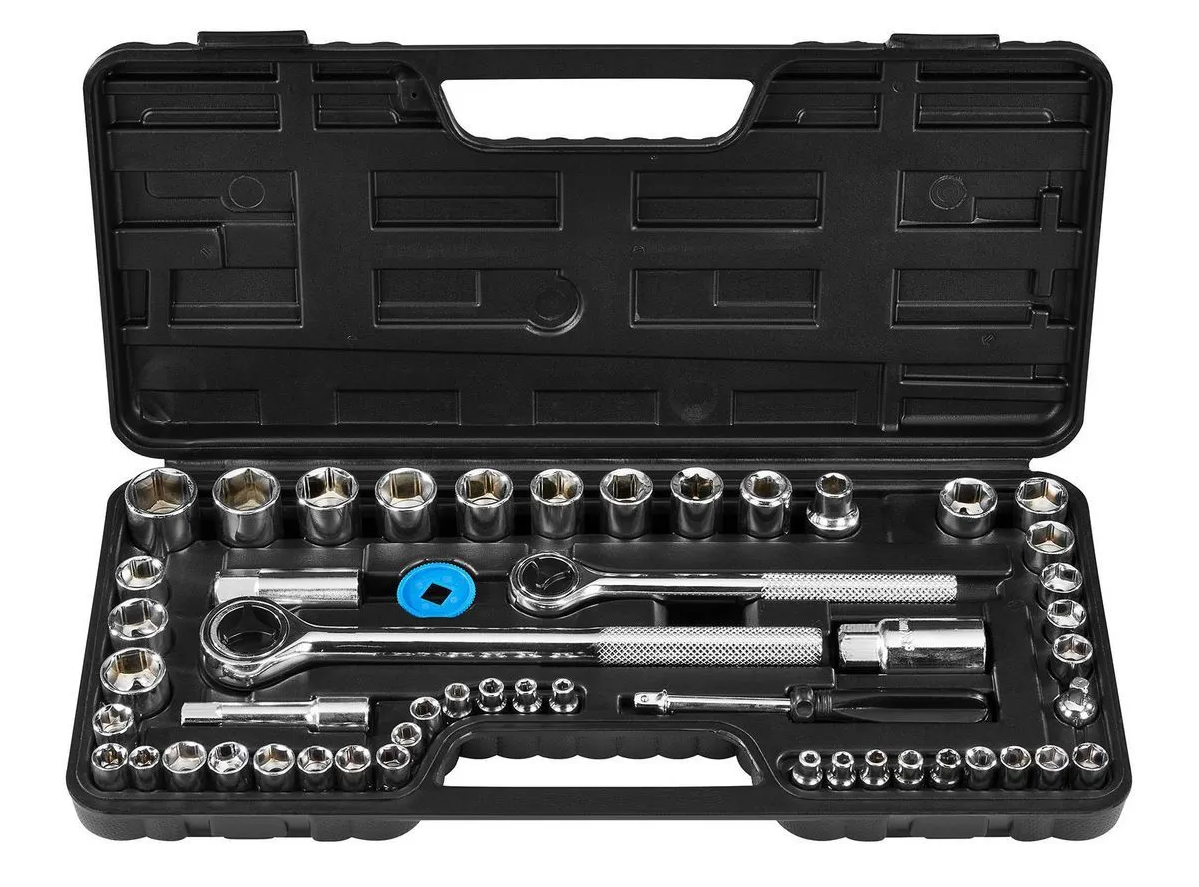
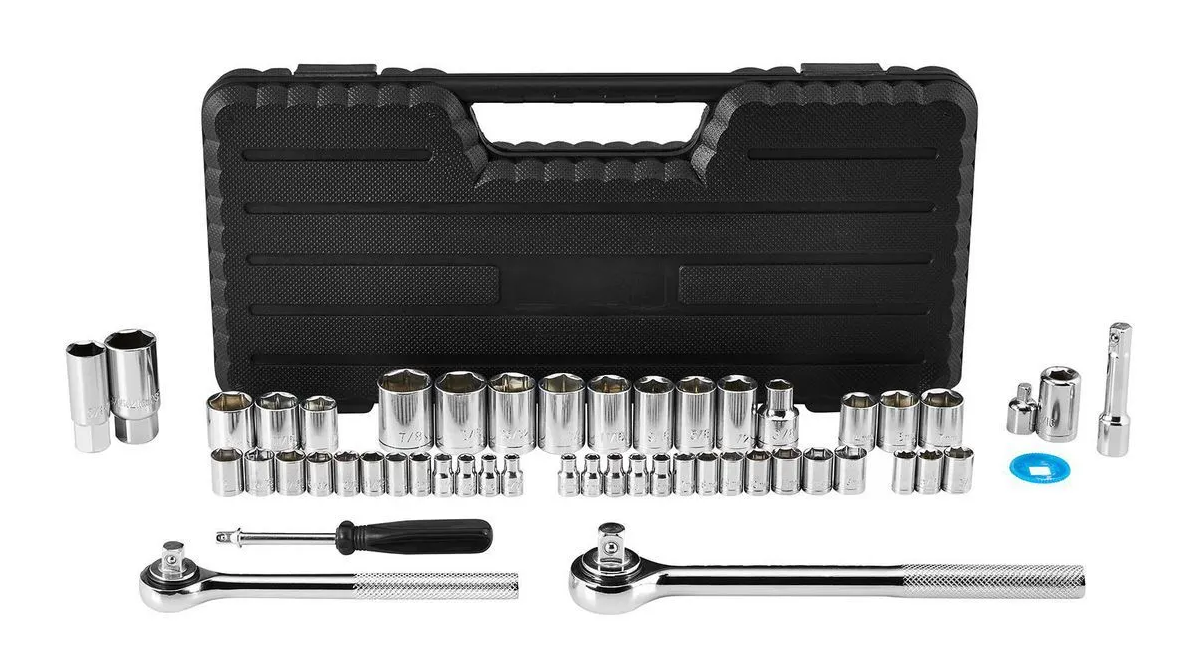
It may not be every day that the average homeowner will have to deal with nuts and bolts around the home, but it does occasionally happen. This is where the last two items on this list come into play. Sitting at #14 is a socket and ratchet set. Set sizes are based on the number of pieces within the set itself. A good basic or beginner set will contain at least 50 pieces with a wide range of standard SAE and metric sockets, a 3/8 in. drive ratchet, a ¼ in. ratchet or adapter, and will have a convenient case to keep it all organized. Some manufacturers like to count the case a one piece, so don’t be shocked to only find 50 actual pieces inside the case of a 51-piece set as seen in the images above.
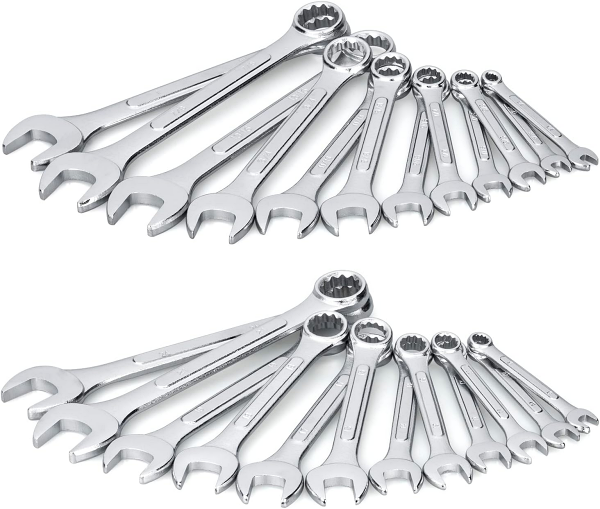
#15 Combination Wrench Set
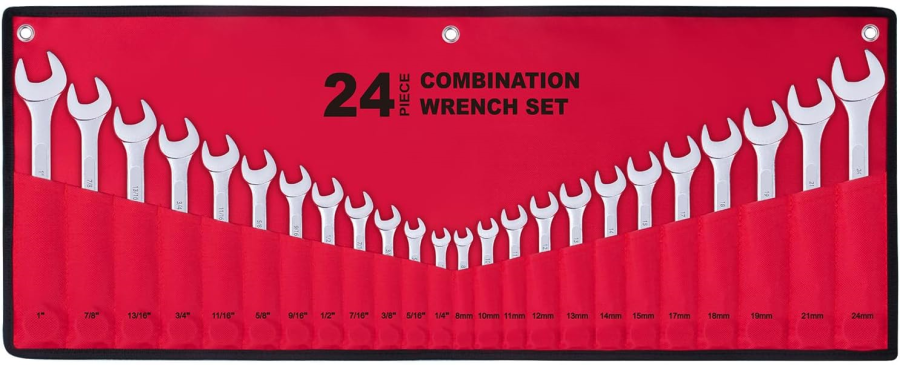
Finally, last, but not least, in this list is the combination wrench set. Combination wrenches have an open end and what is called a box end. Like the socket set, wrenches come in standard SAE and metric sizes. An excellent starter kit should contain 20-24 wrenches. Half that are SAE and the other half being metric. Some kits like the one pictured can be found online for very reasonable prices. Many folks think that when it comes to wrenches, you get what you pay for. Well, if you are using these tools as a professional mechanic, then there would be some truth to that mindset. For the average homeowner however, these less expensive tools will work just fine.